North African cuisine is one of those food worlds where everyone has heard the names but very few people actually know what they’re eating. Couscous, tagine, bourek… you’ve probably ordered one of these in a restaurant, maybe even made one at home. But what’s actually behind these dishes ? Where do they come from ? How do you tell a Moroccan tagine from an Algerian one ? And honestly, why is bourek so underrated outside North Africa ? This guide goes through the dishes you really need to know if you want to understand and cook North African food properly.
One region, several cuisines

Before we dive in, a quick note. North African cuisine isn’t one single cuisine. Morocco, Algeria, Tunisia and Libya all share roots but each country has its own approach, its own spices, its own techniques. The differences are sometimes subtle, sometimes huge. If you want to dig deeper after this article, https://votrecuisineorientale.com has a good selection of authentic recipes and techniques organised by country and dish type, which I find useful when you want to understand the why and not just the how. Now let’s get to the dishes.
Couscous : the dish everyone thinks they know
Couscous is probably the most famous North African dish in the world. And yet, most people in Europe and the US eat a version that’s pretty far from the real thing. Let’s sort that out.
What couscous actually is
Couscous isn’t a dish, it’s an ingredient. It’s tiny granules of semolina, traditionally hand-rolled from durum wheat. The dish we call “couscous” is the combination of these granules plus a stew (usually vegetables, meat, chickpeas) served over them.
The trick ? The semolina needs to be steamed, not boiled. This is the difference between a fluffy, light couscous and a pasty mess. Three rounds of steaming over the simmering stew is the traditional technique, with the grains rested between each round. Yes, it takes time. Yes, it’s worth it.
The different regional versions
Moroccan couscous : sweeter, often featuring caramelised onions, raisins, sometimes prunes. The famous “tfaya” topping is a sweet-savoury mix that’s pretty surprising the first time you try it.
Algerian couscous : heavier on the vegetables (zucchini, carrots, turnips, pumpkin) and lamb or chicken. There’s usually a tomato base, and it’s served with a clear, fragrant broth that you spoon over the grains.
Tunisian couscous : the spicy one. Harissa is involved. The base is often tomato-heavy and red, and you’ll find fish couscous on the coast (something rarely seen in Morocco or Algeria).
Friday couscous is a thing across North Africa. In many families, it’s the traditional Friday lunch, served big, served slow, often with the whole family around the table.
Tagine : the dish that’s a dish and a pot at the same time
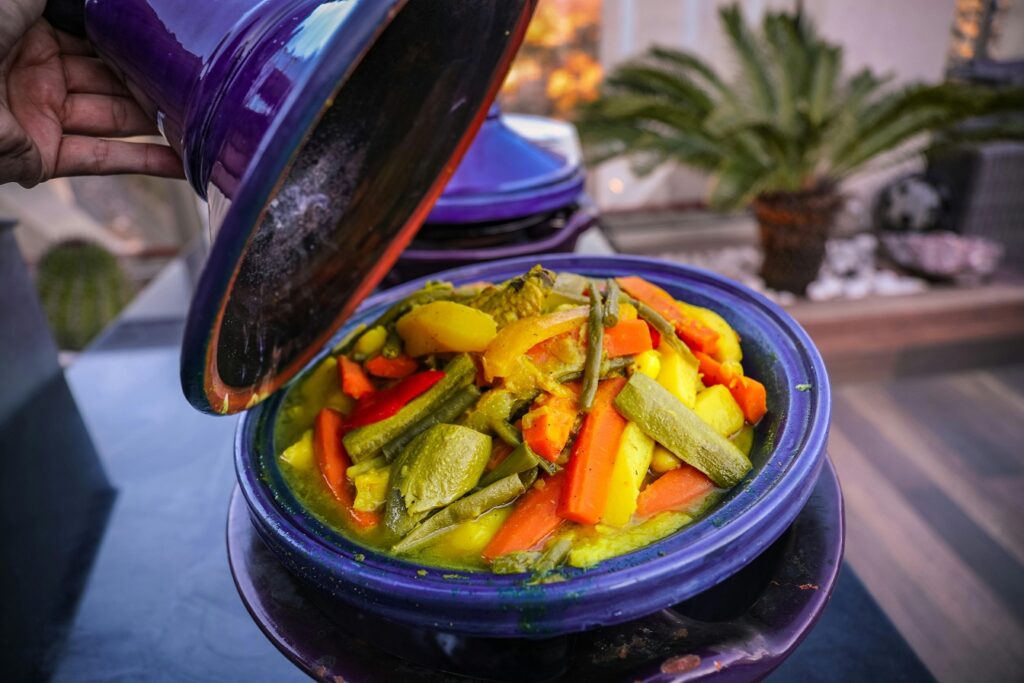
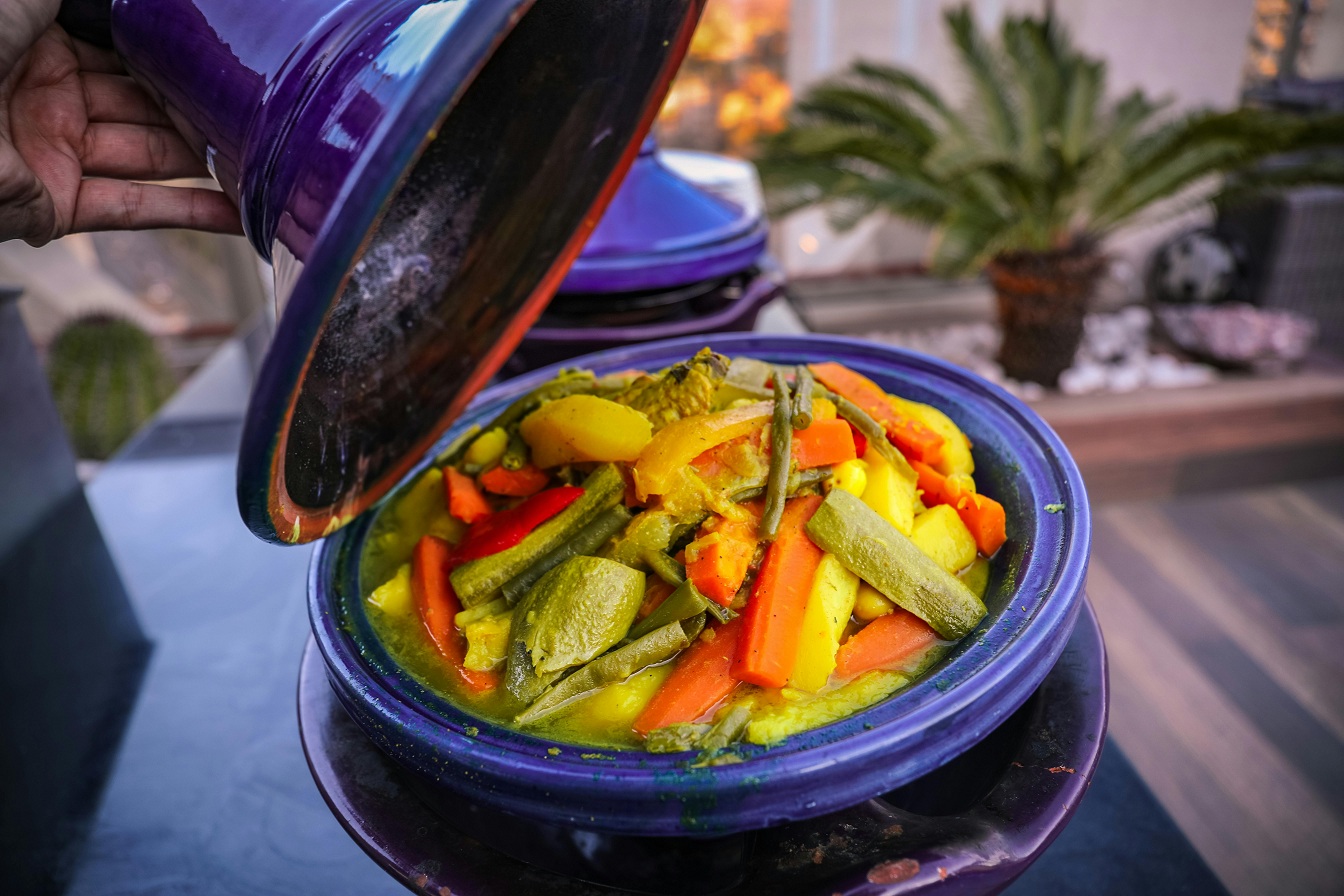
Here’s where things get a bit confusing. “Tagine” refers to both the cooking vessel (the famous conical clay pot) and the slow-cooked stew that’s made in it. So when someone says “I’m making tagine”, they could mean either.
How tagine cooking actually works
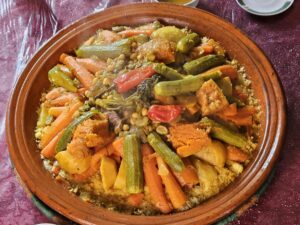
The conical lid is the genius part. As steam rises, it condenses on the cool slopes of the cone and drips back down onto the food. This keeps everything moist with very little added liquid. You’re basically cooking in a self-basting environment.
The result ? Meat that’s incredibly tender, vegetables that hold their shape, and a sauce concentrated with flavour. It’s why a good tagine, properly cooked, has nothing in common with a regular stew.
The classic tagines you should know
Tagine of lamb with prunes and almonds : probably the most famous Moroccan tagine. Sweet and savoury, slow-cooked for hours, with cinnamon, ginger and honey. It sounds weird until you try it.
Tagine of chicken with preserved lemons and olives : the everyday classic. Preserved lemons (different from fresh ones, they’re salted and fermented for weeks) give a tangy, almost umami flavour you really can’t replicate any other way.
Tagine of kefta : meatballs in a tomato sauce, often with eggs cracked on top in the last few minutes. Quick to make, deeply satisfying.
Algerian m’hawer : a brothier version closer to a stew, with whole vegetables.
A quick honest tip : if you don’t have a tagine pot, a heavy cast-iron Dutch oven works fine. You’ll lose a bit of authenticity but the result is still really good. Perso, I’ve made dozens of tagines in a Le Creuset and nobody’s ever complained.
Bourek : the dish most outsiders haven’t heard of
Now this one is criminally underrated outside North Africa. Bourek (sometimes spelled “brik” in Tunisia, or “borek” if we’re being loose with regional spellings) is basically a thin pastry parcel filled with various things.
What’s in a bourek
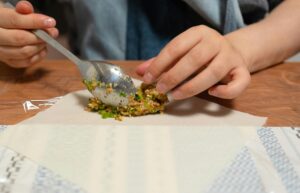
The dough is the key. It’s a very thin, almost transparent sheet of pastry, similar to filo but slightly different in texture. In Tunisia, “malsouka” or “warka” is the specific name for it.
The filling ? It depends on the region :
Tunisian brik : the most iconic. Thin pastry, a runny egg in the middle, tuna or potato, parsley, capers. Folded into a triangle and deep-fried. The challenge : eating it without breaking the yolk before you bite. Honestly, it’s harder than it looks.
Algerian bourek : usually a cigar-shaped roll filled with minced meat, onions and herbs. Served as a starter, especially during Ramadan.
Moroccan briouates : the Moroccan cousin, often smaller, sometimes sweet (filled with almonds and honey) or savoury (meat or seafood).
If you’ve never made bourek, start with the Algerian version. It’s the most forgiving and the easiest to handle for beginners.
Other dishes you really shouldn’t ignore
The three above are the big stars, but North African cuisine goes way beyond. A few more worth knowing :
Harira : the Moroccan soup that breaks the fast during Ramadan. Tomato-based, with lentils, chickpeas, lamb and lots of herbs. Filling, fragrant, very nourishing. A bowl of harira on a cold evening is something special.
Pastilla : a Moroccan pie made with thin pastry, traditionally filled with pigeon (now usually chicken) and almonds, dusted with cinnamon and icing sugar. Sweet, savoury, crunchy, soft. It’s the dish that confuses Europeans the most on first taste.
Chakchouka (or shakshuka): the Tunisian classic. Tomatoes, peppers, onions, often with eggs poached on top. It’s been adopted across the Mediterranean and even into Israeli cuisine. Make it spicy with harissa for the proper version.
Mloukhia : jewish jute leaves cooked into a dark, almost black sauce. Strong, earthy, polarising. Either you love it or you really don’t.
The essential spices and ingredients to keep on hand
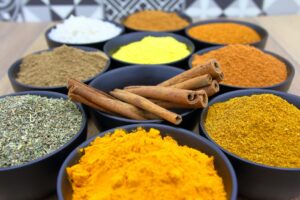
If you want to start cooking North African food at home, here’s the short list of what to stock up on :
Cumin (ground and seeds)
Coriander (ground)
Paprika (sweet and smoked)
Ginger (ground)
Cinnamon (sticks and ground)
Ras el hanout (a spice blend, the recipe varies enormously)
Saffron (a few threads go a long way)
Harissa paste (for Tunisian recipes especially)
Preserved lemons
Green and black olives
Chickpeas
Almonds and dried fruit (raisins, prunes, dates)
With this base, you can cover probably 80% of North African recipes you’ll come across.
Where to start if you’re a beginner
If you’ve never cooked any of this and you’re feeling overwhelmed, here’s my honest order :
Start with chakchouka. It’s quick, it’s forgiving, and it gives you a sense of the flavour palette.
Move to chicken tagine with preserved lemons. One pot, slow cooking, hard to mess up.
Try Algerian bourek. Easier than Tunisian brik, no runny egg to deal with.
Tackle proper steamed couscous. This is where you’ll really feel like you’re cooking North African food, not just borrowing a few spices.
Have you ever tried any of these dishes ? The thing about North African cooking is that it rewards patience way more than skill. Most of these recipes don’t require crazy technique. They require time, good ingredients, and the willingness to let things simmer.
Honestly, the gap between a mediocre tagine and a great one isn’t talent. It’s mostly that the great one was cooked for two hours longer.
Happy cooking.